
Many fabricators focus on production and water clarity without fully reading product labels or understanding downstream risks. This post breaks down what to watch for on chemical labels, why pH and correct chemistry matter, and practical Environmental, Health & Safety (EHS) steps to protect people, equipment, and water quality.
- Read the label — “Corrosive” matters
Watch for words like “Corrosion” or “Corrosive.” Corrosive liquids shorten the life of pumps, tanks, and metal fabrication equipment — and present real EHS hazards. If a product attacks metal, it can also damage skin, eyes, and lungs when aerosolized as mist. Treat corrosive chemicals with the same seriousness as crystalline silica exposures: controls, PPE, and engineering measures are essential. - Why are these chemicals used?
Coagulants and flocculants are used to achieve faster settling and clearer recycled water. Ask: are they necessary for my waste stream? For some shops, a polymer-only approach works if solids, pH and settling time are favorable; in many stone shops — especially with engineered stone — a two-step chemistry is required for consistent clarity. - Coagulant + Flocculant — how they work
Step 1: Coagulant neutralizes particle charge and creates micro-flocs (pin floc).
Step 2: Flocculant (polymer) “bridges” micro-flocs into larger particles that settle faster.
Think of the polymer as a strand that collects many small particles until the mass is heavy enough to settle.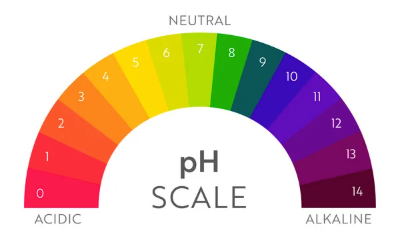
- pH: the pivotal variable
Many coagulant/floc systems work best roughly between pH 6.5–7. Above ~7, the bridging action degrades: polymers collapse, behave like a tangled ball, and can’t capture micro-flocs effectively — poor settling follows.Some proprietary chemistries tolerate a wider pH range, but most liquid floc systems require pH control to consistently meet water quality goals. - Engineered stone complicates settling
Engineered stone contains synthetic components that don’t respond well to polymer-only treatment. Without an effective coagulant and controlled pH, settling is unreliable. With engineered stone often representing a large share of production, monitoring and dosing must be accurate and tied to production rates. - Why pH rises in processing
Cutting/polishing releases trapped minerals and additives that can raise pH (sometimes to ~8). This happens with natural stone and glass too — glass often shows immediate effects, while stone can cause gradual buildup in recirculating systems. pH rises are primarily process-driven, not simply “bacterial” issues. - Operational factors that determine treated-water quality
Correct chemical selection is only one part. Metering accuracy, mixing energy after injection, turbulence that may break flocs, and dwell/settling time in the tank all influence clarity. Over- or under-dosing relative to production causes variability. Proper pump design (e.g., vortex sump pumps) and gentle transfer help avoid breaking settled floc. - Clarifiers and real-world evidence
Clarifier plates are intended to improve settling when liquid floc systems are still forming flocs in the tank. Some treatment chemistries complete most flocculation before transfer, reducing reliance on extensive clarifier internals. Design treatment and mechanical systems to match the chemistry in use. - Bacteria, odors, and pH misconceptions
Elevated pH is usually from processing, not bacteria. Anaerobic bacteria actually lower pH by producing CO2 (carbonic acid) and hydrogen sulfide (rotten-egg odor). Regular bacterial monitoring is recommended. Preventative biocide strategies (bromine is a simple, low-corrosion option; hydrogen peroxide is effective but more complex) keep biofilms and anaerobic zones under control. Shocking late after heavy biofouling is less effective than routine control. - EHS checklist (practical actions)
• Review product SDS and label language for “corrosive” and health hazards.
• Implement PPE and engineering controls for mist/aerosol exposure.
• Monitor pH continuously or regularly; log trends tied to production.
• Meter chemicals proportional to production; verify mixing and dwell time.
• Use bacterial testing and a preventative biocide program.
• Favor pumps and transfer methods that protect formed floc (vortex or gentle transfer).
• Train staff on chemical handling, spill response, and respiratory protection where needed.
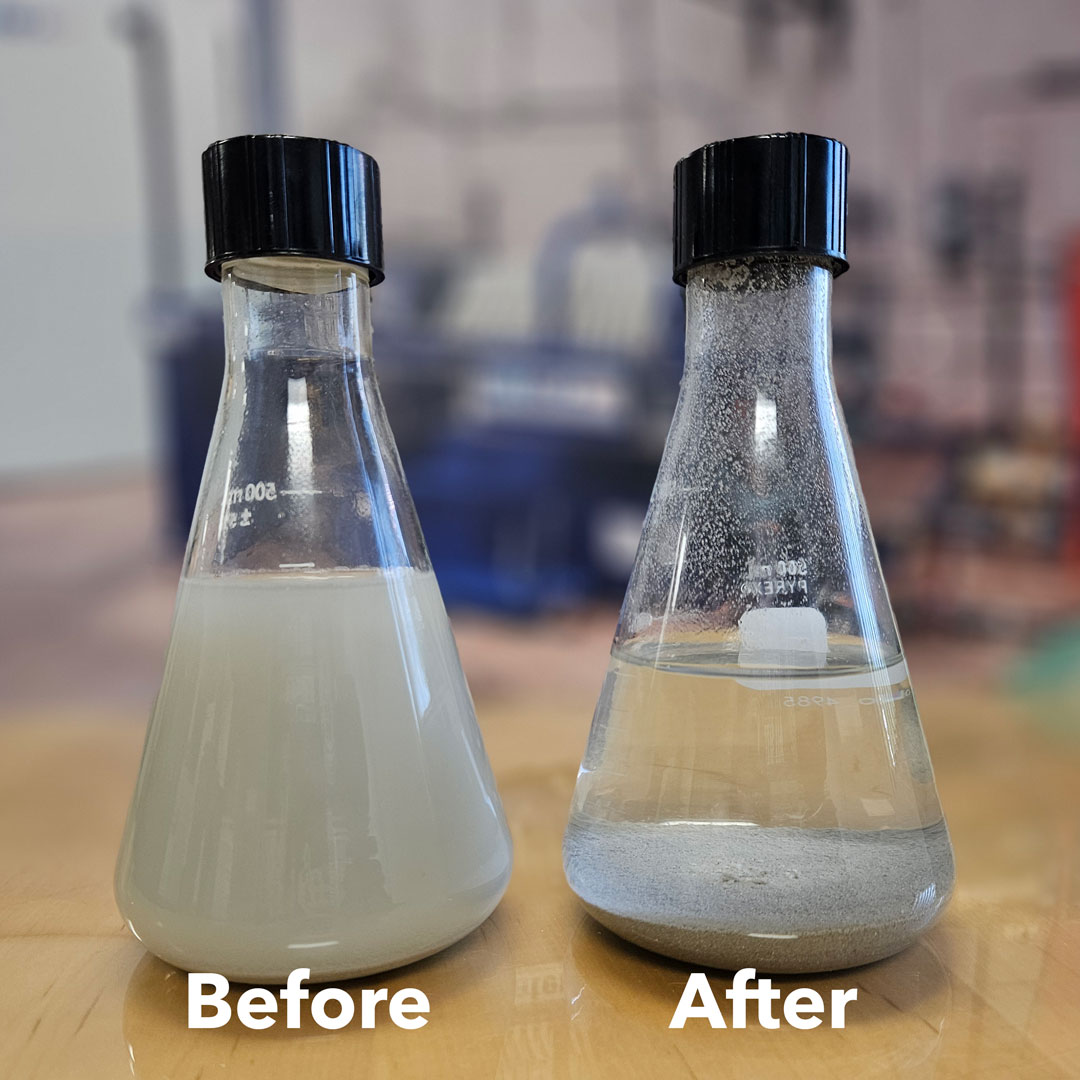
In closing, good water clarity depends on chemistry, pH control, equipment, and operations acting together — and on reading labels and understanding EHS implications. Ask whether your chosen chemicals are compatible with your production mix (natural vs. engineered stone), whether pH control is needed, and whether your mechanical design supports the chemistry. If you’d like, we can help translate your current product labels and SDS into a site-specific EHS and dosing plan.
We at Water Treatment Solutions have been committed to Chemical Free Water Recycling for over 30 years and remain committed to safe, crystal-clear recycled water. Our ECO-Clean environmentally friendly settling technology eliminates the need for any liquid chemistry or pH adjust requirements. WTS can provide new systems, upgrades to existing WTS systems, as well as conversions from any liquid gravity settling designs to incorporate ECO-Clean.
WTS remains committed to providing water recycling systems that are safe for your employees, your equipment, and the environment.
Comments are closed.